
Generated Title: Zcash's Privacy Push: A Calculated Gamble or a Flash in th...
2025-11-10 2 Zcash
Zcash (ZEC), the privacy-focused cryptocurrency, has been making headlines with a +700% surge since September. That's a move that grabs attention in any market, crypto or otherwise. But is this a genuine resurgence driven by renewed interest in privacy, or just another pump-and-dump scheme waiting to leave latecomers holding the bag? As someone who spent years sifting through financial data, I'm naturally skeptical of narratives that seem too good to be true.
The core argument for Zcash's rally revolves around a growing concern over privacy in the crypto space. Bitcoin, for all its revolutionary potential, isn't exactly private. Every transaction is recorded on a public ledger (see mempool.space for a live view), making it relatively easy to track the flow of funds. This has led to a philosophical split in the crypto community, with some arguing that privacy is a fundamental right, while others prioritize transparency for regulatory compliance.
Zcash attempts to bridge this gap by offering optional privacy through zk-SNARKs (zero-knowledge succinct non-interactive arguments of knowledge). These cryptographic proofs allow users to shield transactions, hiding the sender, receiver, and amount while still verifying the validity of the transaction. Monero (XMR), another privacy coin, achieves privacy through ring signatures, but Zcash's zk-SNARKs offer potentially stronger privacy guarantees and quantum resistance.
But here's where the data starts to paint a more nuanced picture. While Zcash offers privacy, it's not the default setting. Users have to actively choose to use shielded addresses ("z-addresses") to protect their transactions. This creates a bimodal system where some transactions are public and others are private, potentially weakening the overall anonymity set.
The recent increase in the percentage of ZEC supply held in shielded pools is encouraging (over 30% for the first time). This suggests that more users are taking advantage of Zcash's privacy features. However, it also raises a critical question: Why now? What changed in September to trigger this sudden shift in behavior?
One explanation is the growing institutionalization of Bitcoin. The approval of spot Bitcoin ETFs has brought in a wave of new investors, but it has also raised concerns about centralization and regulatory control. As Bitcoin becomes more mainstream, some crypto enthusiasts may be seeking out alternative cryptocurrencies that offer greater privacy.
Another factor could be the increasing sophistication of on-chain surveillance tools. Companies like Chainalysis and social media sleuths (ZachXBT, Lookonchain) are making it easier to track crypto transactions and identify individuals. This increased visibility may be driving demand for privacy coins like Zcash. Is Zcash Rising Because Bitcoin Lost Its Cypherpunk Soul?
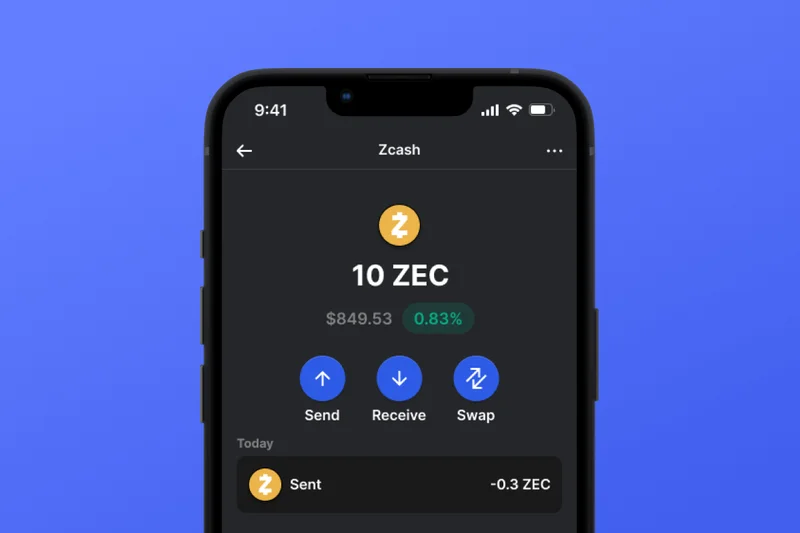
The launch of the Zashi wallet in March 2024 is another potential catalyst. Zashi simplifies the process of shielding transactions, making it more accessible to average users. The integration of NEAR Intents into Zashi further reduces friction by allowing users to move assets from transparent networks into Zcash's shielded pools without exposing every step on-chain.
However, it's important to note that Zcash still faces significant challenges. Its network node count (around 100-120) is far smaller than Bitcoin's (~24,000) or even Monero's (~4,000). This is largely due to the resource-intensive nature of verifying shielded transactions using zk-SNARKs. Each shielded transaction requires more CPU and memory than Bitcoin's standard signature checks.
And this is the part of the report that I find genuinely puzzling: the node count. It's significantly more resource-intensive to operate a Zcash node. Each shielded transaction must be verified using zk-SNARKs, which require more CPU and memory than Bitcoin’s standard signature checks. The network’s multi-pool architecture (Sprout, Sapling, Orchard) adds further complexity, and frequent network upgrades force node operators to update software regularly to remain compatible. It will be interesting to see how the node count continues to fluctuate over time, especially if this privacy “rotation” remains intact.
The regulatory landscape is also a major concern. Privacy coins have long been a target of government scrutiny. Samourai Wallet, a Bitcoin privacy tool, was effectively shut down following the arrest of its founders, and Wasabi Wallet discontinued its CoinJoin feature amid regulatory concerns. While Zcash's optional privacy may make it less of a target than Monero (which enforces privacy by default), it's still vulnerable to regulatory action.
Economist Lyn Alden has cautioned investors not to fall for "coordinated token pumps," and it's a warning worth heeding. Zcash has a history of volatile price swings, and its long-term performance has been lackluster. While the recent rally is impressive, it's not clear whether it's sustainable.
Investor Naval Ravikant countered with a fundamental argument for Zcash, saying “transparent crypto won’t survive a government crackdown.” It's a valid point. The long-term viability of cryptocurrencies may depend on their ability to protect user privacy. But that doesn't necessarily make Zcash a winner.
Zcash's recent surge is undoubtedly impressive. However, it's crucial to separate the hype from the underlying fundamentals. While renewed interest in privacy and improved usability may be driving demand, Zcash still faces significant challenges in terms of network scalability, regulatory risk, and competition from other privacy coins. Ultimately, whether this rally marks a genuine comeback or just a temporary blip remains to be seen. The fundamentals haven't radically changed (or haven't changed enough), but the perception around the tech certainly has.
Tags: Zcash
Related Articles
Generated Title: Zcash's Privacy Push: A Calculated Gamble or a Flash in th...
2025-11-10 2 Zcash

It’s not often you get to witness a ghost come back to life. But for the la...
2025-10-02 14 Zcash